
In regards to search engine optimization, CTR manipulation has emerged as a powerful tactic for businesses seeking faster ranking improvements. By strategically increasing click‑through rates on search results, companies can send strong user preference signals to Google, often leading to quicker visibility gains and better overall performance. When executed thoughtfully, this approach proves a net positive, helping sites climb SERPs and drive sustainable growth.
Understanding CTR Manipulation’s Role in Rankings
CTR manipulation involves boosting the percentage of users who click your listing after seeing it in search results. Tools and services simulate or encourage clicks through methods like microtask platforms, proxy networks, and behavioral emulation—making traffic look natural with varied devices, locations, and session lengths.
Google views high CTR as a vote of confidence: if more people choose your result, it must match intent better. Experiments confirm short‑term lifts—pages jumping from position 7 to 1 after targeted campaigns—but smart users extend gains by pairing it with quality content. For local Maps or competitive niches, this nudge breaks plateaus where traditional SEO stalls.
Clear Benefits for Business Rankings
The net positives are hard to ignore. Businesses benefit most when CTR manipulation accelerates other efforts
New or mid‑page content gains traction fast. One test saw a restaurant hit #2 locally via simulated clicks, proving relevance in tight markets.
Competitive edge: In saturated keywords, inflated CTR outpaces rivals, securing top spots that capture 27%+ of traffic.
Compounding signals: Higher positions attract real clicks, creating a flywheel. Blogs and e‑com sites report 20–50% organic boosts post‑campaign.
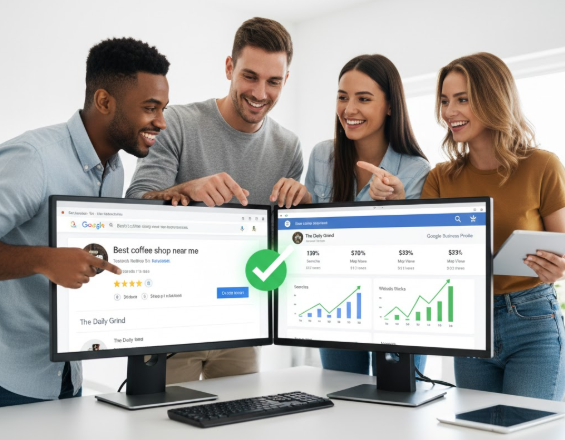
Local SEO amplifier: For GBP and Maps, it enhances pack rankings, turning “near me” searches into leads.
Unlike risky black‑hat spam, ethical tools focus on volume control and authenticity, minimizing detection while maximizing impact.
Real‑World Proof of Positive Outcomes
Case studies highlight the upside. SEO firms using CTR for client sites saw stalled pages rocket upward, with gains holding as engagement normalized. A local service provider tested it after full optimization—results held because underlying quality supported the signal.
Data backs it: High CTR correlates with better behavioral metrics (dwell time, low bounce), reinforcing long‑term trust. Agencies note 2–3x faster ROI versus pure content plays, especially for revenue‑critical terms.
- Strategic Implementation for Maximum Gains
To make CTR manipulation a net positive: - Optimize first: Strong content, speed, mobile UX.
- Target wisely: 5–10 high‑value keywords.
- Go gradual: 2–4 weeks, mimicking organic ramps.
- Measure holistically: Rankings, traffic, conversions.
- Platforms like those emphasizing real‑user flows excel, blending tactics for sustained boosts.
For companies, it’s a smart accelerator. In a landscape where page 1 owns 91% of clicks, CTR manipulation levels the field, boosts rankings reliably, and delivers results that stick when fundamentals align. It’s not magic—it’s momentum.